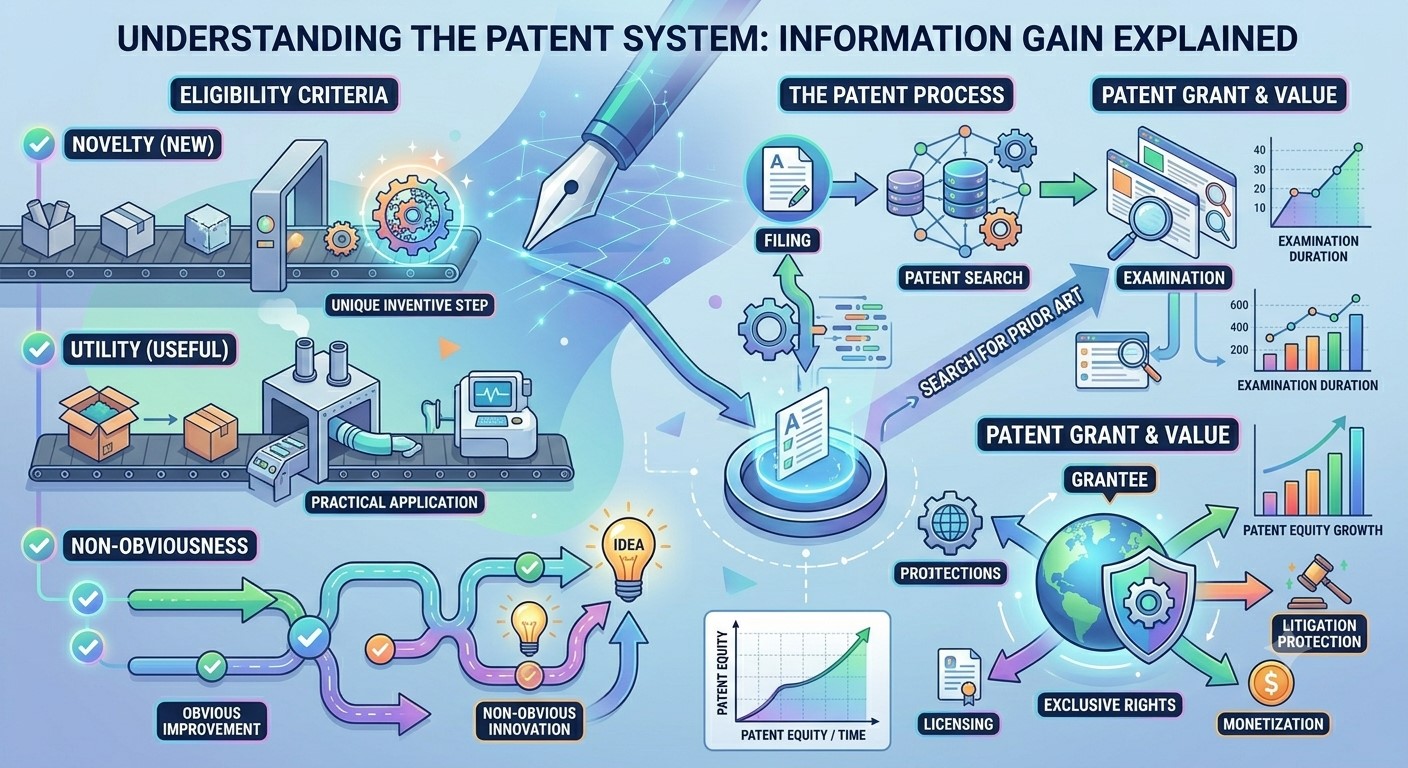
A few times recently I’ve had to explain to clients the concept of information gain. It’s a topic that’s cropped up quite a few times recently in discussions around Google core updates, so I thought it warranted a quick blog post to explain.
Information Gain: What is it?
When you write about a topic on your website, how much do you put into it? And by that I mean research, effort, and outcomes.
Be honest because for most websites, the process looks a little bit like this:
- Pick a keyword, by looking at what’s already ranking on page one or within “striking distance” of page one,
- Write something that covers the same ground, perhaps a little longer, perhaps with a nicer layout.
The result of this work is usually a Google Search results page where ten articles all say broadly the same thing in slightly different words.
Information gain is the antidote to all that. In plain terms, it’s a measure of how much new information your content adds beyond what a searcher has already seen elsewhere. If someone reads three articles on a topic and then lands on yours, ask yourself this most important question:
Does your page teach them anything the first three didn’t?
If the answer is no, your page has low information gain, however well written it may be.
Information Gain isn’t just an SEO buzzword
The term information gain comes direct from Google rather than being an industry thing. As evidence, Google filed a patent in October 2018 called “Contextual estimation of link information gain”, which was granted in June 2022 (It’s at US11354342B2, if you fancy some bedtime reading).
The patent describes a system that calculates an “information gain score” for a document based on how much additional information it contains beyond documents the user has already viewed on the same topic. That score can then be used to rank or re-rank results, favouring pages that add something new over pages that repeat what’s already been consumed.
To be clear, the usual caveat applies here: a patent is not confirmation that Google uses this in production, and Google has neither confirmed nor denied it. But it does give us insights into how Google is thinking about the problem, and that thinking lines up neatly with everything else we’ve seen from them in recent years.
Why it keeps coming up around core updates
If you’ve followed the pattern of core updates since Google’s helpful content system was folded into them, you’ll have seen that a theme emerges. The sites that get hit hardest tend to be the ones producing content that is technically fine but adds nothing such as rewritten versions of whatever already ranks, thin affiliate roundups of products that the author has never touched (Did I say that?!), and increasingly, AI-generated articles that are, by their very nature, just a rehash of existing information.
It’s that last point matters more than ever now; Generative AI has made it trivially cheap to produce content that summarises the current consensus on any topic. Which means that the web is filling up with exactly the kind of low-information-gain content this patent is designed to demote. If everyone can produce “just as good” content as every else has already done, quite literally at the push of a button, then “just as good” is worthless as a ranking proposition. It turns the phrase “perfection is the enemy of the good” on its head, and now, going against Voltaire’s original vector, maybe pursuit of perfection is the track we should get back on, asymptotic as it may seem.
Information gain also matters a great deal for AI search. The patent itself seems to have been written largely in the context of automated assistants, and it’s not hard to see why a Google AI Overview or a chatbot answer would favour sources that contribute something that’s unique and distinct rather than ten interchangeable summaries.
What adding information gain actually looks like
The good news is that most businesses out there are already sitting on information nobody else has. This fits so nicely in with E-E-A-T, the loose framework of ensuring that websites and individual pages demonstrate that oh-so personal Expertise, Experience, Authoritativeness, and Trustworthiness. The trick here is getting this all onto the page. Some practical ways to do that are:
- First-party data: Your sales figures, support tickets, survey results and case studies are unique to you. Even a small dataset can beat a big opinion.
- Genuine experience: If you’re reviewing a product, buy it, use it, photograph it, and say what surprised you. If you’re explaining a process, include the mistakes you made and the things the official documentation doesn’t tell you. That’s so unique.
- Expert opinion with a spine: A quote from someone who actually does the work, especially one that disagrees with the received wisdom, can add more value than simply one more restatement of best practice principles.
- Answering the next question: Look at what the Search Engine Ranking Pages (SERPs) cover, then ask what a reader would still want to know afterwards. That gap, those remaining unanswered questions, are a huge opportunity for you.
- That genuinely different angle: Sometimes information gain isn’t new facts but actually a new framing. For example, a comparison that nobody has made, a niche audience that nobody has addressed, or a counterargument that nobody has voiced… yet.
Dig deep and find your own voice, your own data, your won opinion. I can assist with that on a discovery call because often that is where the unique points of view surface, from the keywords in a conversation, not what you’ve sanitised to put on your corporate blog.
A quick reality test for your own content
Before you do publish anything new, ask yourself one question: if this page disappeared tomorrow, would the internet have lost anything? If every fact, tip and opinion on it can be found on the pages already ranking, the honest answer is no, and you shouldn’t expect Google to reward it.
That may sound a bit blunt, but it’s actually very liberating. As an old boss used to say, “Does it pass the ‘so what’ test?”. It means that the way to compete is not to write more, or longer, or faster than everyone else. It’s to write what only you can write. For most businesses, that’s a genuinely far more winnable game, you just need to dig to get to that rich vein of source, and once you’ve found it and experienced it, you should be able to tap into it again and again.
If you’d like a hand auditing your existing content for information gain, or working out what unique knowledge your business is sitting on, get in touch.