
 Many years ago I used to joke about how nothing is sacred to advertisers and that one day you wouldn’t even be able to go for a quiet visit to the “throne room” without being advertised to; unreeling the toilet roll, there would be an advert on your triple-quilted soft-ply toilet tissue and you’d finally realise that there was nowhere safe to hide from the advertisers. But at least, if you didn’t like what was being advertised, you know what you could do with it 😉
Seriously though, in this day and age, advertising is really starting to cross the line.
Now I must state that I’m not here to bash advertising full stop; I work in the web industry where advertising pays the bills and puts food on the table and advertising has it’s place – but the definition of “it’s place” is now a rapidly moving target.
This morning, I was out driving in my car, using the Waze app on my iPhone, not to navigate around the roads that I know like the back of my hand, but to keep abreast of developments in traffic. After 30 minutes, for the first time ever, an ad flashed up on my screen. It makes sense that, using a free app, it had to be paid for somehow and, since Google brought Waze for a cool billion dollars, there are now ads in the app.
 My home town of Farnborough does not have the best of town centres; it has an ugly mix of modern buildings dating back to the 1960s and spanning every decade since then with suitably obnoxious architecture from each period all groaning for attention.
 If you look at your stats in Google Analytics on a daily basis as I do, then you can’t have helped notice an increase in the “not provided” phrase at the top of your organic traffic results.
 Logo and branding changes can often be contentious things.
 Last night’s episode of Dragons’ Den on BBC was a corker.
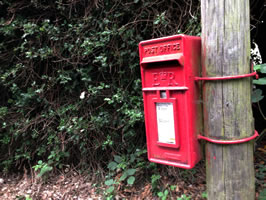 This morning I was listening to Evan Davis’ guests on the Today Programme on BBC Radio 4. Speaking about the imminent privatisation of Royal Mail this coming Autumn, one of the guests from a workers’ union pointed out that the Royal Mail is a universal service and that deliveries in high-density urban areas effectively subsidised those in rural areas.
 A recent report from the Federation of Small Businesses (FSB) suggested that, cumulatively, cybercrime was costing British businesses millions. When estimated down to a per-business level, the FSB worked out that cybercrime is costing every business around £4,000 every year.
 When Google announced it would be switching off Google Reader, I have to admit that I was a bit surprised. Google Reader is as much part of my professional daily routine as email, my browsers, web stats, design, search and SEO tools.
 The first small business news story of the day today is that Lord Young, David Cameron’s Enterprise Adviser, wants to